Showing posts with label Old School 5E. Show all posts

Saturday, March 12, 2022

Death and Skullport (an Undermountain play report)

I'm still playing catch-up on older game reports for our Undermountain campaign.  The objective of the players has been to find a way through the dungeon to the underground pirate city of Skullport, which is home to the headquarters of the secretive Xanathar's Guild, the major thieves' guild in Waterdeep.  The Black Staff, a wizardly protector of Waterdeep, has commissioned the players to eliminate a threat facing Waterdeep - the minds of ordinary citizens are being replaced by intellect controllers under the control of a mind flayer working with the guild.  After months of play, the players are getting close to their objective!  Last game, they agreed to act as ambassadors to the hobgoblin nation of Azrok and take a diplomatic missive to Xanathar's agents.

As an aside on Undermountain (I'm using the 5E Dungeon of the Mad Mage) it really does a fine job of creating a living underworld, with connections between inhabitants, between levels, and story elements that can drive the campaign forward.  I recommend the dungeon master develop story reasons for the players to be interested in Undermountain that fit their own campaign and the play styles of the players.  For my group, the aspiration to be members of the Harpers and the group 'Force Grey' gave them sufficient reason to take on complex quests from figures like the Blackstaff. The books Dragon Heist and Dungeon of the Mad Mage provide you a lot of "lego pieces" to customize a cool exploration based campaign.  It's classic 1970's dungeon crawling, but with 5E systems.

Skullport from Dungeon of the Mad Mage

Skullport is a harbor town located in a large cavern on the shore of an underground lake.  Apparently there used to be locks and waterways to reach the city from a hidden sea cave on the surface, but that way no longer allows large sailing vessels to reach the port, and the population of the town is dwindling.  The mouth of the harbor is guarded by an oppressive fortress squatting atop the aptly named "Skull Island".

There are several cave passages between Undermountain (level 3) and the town of Skullport; the slow moving Sargauth River that flows through level 3 also leads to Skullport harbor.  My players used a passage guarded by the hobgoblin kingdom, the "Ghost Way", where they indeed needed to skirt a haunted cavern to reach Skullport.  We spent 1-2 game sessions with the players carousing around Skullport, visiting pubs such as the Black Tankard and the Dragon and the Flagon, while seeking the location of one of Xanathar's agents to give the wax sealed scroll with a message from the hobgoblin king.  Word reached the commander of Skull Island, an 8' tall half-ogre champion called Sundeth, who flew out of the dark cavern on a wyvern mount to receive the character's message.  Sundeth dispatched a courier to take it to Xanathar; the players foresaw something like this happening and made their rogue, Teukros, invisible in advance.  Teukros was able to tail the courier to an entrance to the thieves' guild, in the basement of an inn called the Gut and Gartner.  A long arc of the campaign was coming to a close and the players were now ready to return to the surface, share their intelligence with the Blackstaff, and identify what comes next.

There's a saying "you can lead a horse to water, but you can't make them drink…"  It applies equally to RPG players.  There have been several times during the course of the campaign where the character's faction connections, be it Force Grey, the Harpers, or even the Zhentarim, have made it clear there are friendly agents in Skullport who could aid the characters in getting back to the surface if they're able to make contact.  My group of players considered this tact and declared, "seeking out friendly agents sounds too much like work, let's figure out if we can sneak or fight our way back through the drow city".   (The last time they tussled with the drow a character died and the rest of the player characters fled for their lives).

Backtracking through the hobgoblin kingdom, making their way to the drow outskirts, and sneaking through the drow city was certainly a legitimate option to try.  They came up with an intricate plan to go "light-free" and  guide their blinded characters with ropes, while sneaking along the outskirts of the ruined dwarven hold and avoiding drow patrols.  Unfortunately, they had a barbarian in the group.  Bosko, their goliath barbarian, got frustrated about not being able to see in the darkness; he tossed his drift globe in the air, yelled the command word for daylight, and charged into a nearby intersection, daring the drow to come out and fight like men.

There was a movie in the late 1960's, Butch Cassidy and the Sundance Kid - it tells the story of the legendary train robbers and gun fighters.  At the end, Butch and Sundance are living as outlaws in Bolivia where they are identified by the local police while eating at an outdoor cafĂ©.  The Bolivian Army arrives and surrounds them completely, and the movie ends in a hail of gunfire.  That's a good metaphor for what happens next to my players.

Bosko and some of the frontline fighters (like Alfred, the duelist fighter) created one front at an intersection, dueling at a  drow elite warrior and some flunky soldiers.  Virsk (cleric), Teukros (rogue), and Ace (their elf wizard), were embattled on a nearby street fighting a gaggle of quaggoths, including a quaggoth shaman who was frying Virsk with a heat metal spell.  Giant spiders were bearing down on them from above and plopping into the combat, and ordinary drow soldiers would pop out of an alley, fire a sleep dart with a hand crossbow, and then duck back out of sight, using effective hit and run tactics.  It was all very exciting and cinematic (for me).

One of the things I like to do stylistically, when it makes sense, is to use "cut scenes" to raise the tension at the table.  It's a good technique to give the players information their characters don't know.  In a situation like the pitched battle in the drow city streets, I'd describe (in between combat rounds) how forces are mobilizing in other parts of the city; bells are rung and drow soldiers fall out of the barracks with their gear; the drow priestess abandons her meditations and brandishes her freaky tentacle scourge as she makes her way out of her sanctuary.  As a dungeon master, this transparency gives the players necessary information to make choices, raises the stakes and tension, and relieves my conscience in case the reinforcements flatten the player characters if the players don't switch strategies.  The key to being a fair bare-knuckled DM is to give the players the information they need to plan and make choices so the consequences aren't arbitrary (particularly when a TPK, total party kill, is looming on the horizon).

This was an interesting moment for the players.  I actually had one player, who plays in many other 5E games, quip to his compatriots, "It's nothing to worry about, we'll be fine - 5E is balanced for the players to win".  The others were hearing the ominous forces winding towards the battle front and were looking for ways to escape.  There are modern DM's who embrace a "fail forward" philosophy - no matter how boneheaded the player's choices are, they'll find a way to minimize the negative results to avoid total failure or death.  Do any of you do it that way?  Character death has been part of the campaign since we started, and the players have known all along failure can be final.

This session ended with several of the characters at zero hit points or unconscious, finally succumbing tothe drow sleep poison darts flying in at them; Teukros broke off using his rogue skills ("bonus action disengage" the 5E rogue's cheesiest declaration) and creating darkness to cover the escape of him and Virsk the cleric.  Bosko, Ace, and Alfred were cut off and became prisoners of the drow (ultimate fate yet to be decided).  Teukros and Virsk stumbled into a cave that looked out on the swirling black waters of the Sargauth river.  There was a raft nearby.  We ended this game with them drifting off into the darkness, putting distance between themselves and the carnage back in the ruins.  The river would eventually take them back to Skullport.

The players of Bosko, Ace, and Alfred would make new characters for next game - thugs or outlaws that could be met in one of the dockside taverns in Skullport.

Sunday, January 16, 2022

That Ineffable Quality of Old School Gaming

A couple of years ago, I said many 5E discussions observed online made me feel like Dungeons & Dragons was becoming a cargo cult.    This is never more evident than when considering how to play 5E in an old school way.  Here at the beginning of 2022, I've seen nothing to dissuade me from that position.  It's remarkable how popular 5th edition continues to be with the broader gaming world, and it's natural to want to try playing it in a way that recaptures the magic of earlier editions, too.

We just need the right combination of rules!

Here are some examples, culled from recent discussions I've observed, on what gamers say needs to happen to make 5E play like an old school game.  First, you need random character generation; characters should be generated via a 3d6 roll in order for stats.  Leveling needs to slow down.  Healing needs to slow down - 5E's daily "long rests" should be changed to once per week.  Another idea is to liberalize the use of the exhaustion rules - for instance apply a level of exhaustion each time a character drops to zero hit points in a combat.  (None of the older editions had similar exhaustion rules, but I appreciate the thoughts).

Maybe it's about changing spell preparation - let's get rid of cantrips and return to strict 1E AD&D spell preparation.  Wizards and Clerics need to strictly choose exactly what they're preparing instead of having flexible spell slots.  (We should rename Wizards to Magic Users, as well).  Or it's those missing 2d6 morale rolls for monsters that the BX system used, we must reinstate morale checks.  5E doesn't have permanent level drains or many save-or-die effects, which limits the instant death and permanent harm to players.  Gotta put those back.  Vampires drain two levels per successful attack!

Did you know there are no race/class limits in modern D&D?  Halfings aren't limited to 6th level in fighter, and elves can rise to unlimited levels in magic users.  Another commenter chimes in… 5E can never be old school until it embraces procedurally generated random content - random stocking, wandering monsters, all of it.  Another says you must abandon milestone experience and embrace GP = XP and load up the dungeons with treasure.  That is the way.

If we slow down level advancement and require training costs to level up, and spend the commensurate down-time, we will rediscover that old school feeling.  We also need to make sure the player characters have plenty of retainers, hirelings, and henchmen - those stories from the olden days always had lots of sidekicks and torchbearers, 10-person parties going into the dungeon. Finally, we need to speed up 5E character generation - there is a direct correlation between the speed of character creation and how old school the game feels.

My understanding is there are several intrepid game designers who have collated some or all of these old school tropes into a set of rules you can apply to your 5E.  I do wonder how that's working out for people who have tried them.

I hope my tone here has been mostly bemusement and not derision.  I only mean to poke some gentle fun.  Clearly I believe it's a worthy endeavor to play 5E in a way that captures the spirit of older editions, in fact it's been my project for several years.  In my experience it's about how you run the game at the table and the style of adventure.  You're not going to find any old school feeling hidden in a rule book.  I'm about to start posting actual play reports to get caught up on Undermountain (Waterdeep:  Dungeon of the Mad Mage) and then we'll surely revisit this topic.

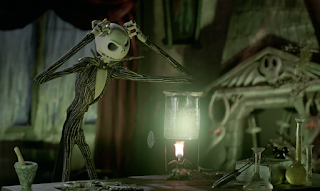
Maybe we need to cosplay as 1st edition players?

*With apologies to The Nightmare Before Christmas.  It's still one of my favorite movies, after all these years, and I frequently ask my IT teams to consider whether they're delivering severed heads or gifts to their customers as CX becomes so important.  Similarly Jack Skellington's hunt for that elusive Christmas spirit seemed an apt metaphor here.

Wednesday, January 15, 2020

Can 5E Play Like an Old School Game?

Answer:  It can get most of the way there, but is the juice worth the squeeze?

I prefer to run site-based adventures like hex crawls and dungeons, and let the story of the game emerge organically from player choice.  The referee provides enough information or opportunities to get information that the players can boldly plan their own adventures.  You also need an experience system that's transparent, and a way of telegraphing danger and relative risk-reward so the players can make smart (or at least informed) choices.

This play style I just described is what pulled me back to 1st edition AD&D and away from 4E or even Pathfinder.  Along the way I discovered the OSR and games like Labyrinth Lord, Swords & Wizardry, and Lamentations of the Flame Princess.  Now I've spent the past year throwing myself exuberantly into 5E.

Since running the campaign Tomb of Annihilation for 25+ sessions now, I'm wondering whether the issue with 5E and the old school is more about the types of adventures being delivered, versus how much "system matters".  Tomb is very much an old school style campaign - a sprawling hex crawl filled with adventure sites and mini dungeons, followed by a ruined jungle city, a Yuan-Ti dungeon lair, and a multi-level high level dungeon.  It's certainly proof positive that an old school site-based adventure works under New D&D.

That all being said, there are some issues with 5E that curtail it's ability to be an apples to apples replacement for an OSR game; there are pinch points where system does matter.  Here are my observations:

Lethality
As a whole, 5E "seems" less lethal.  It's no joke that 1E Magic Users can be killed by a house cat and a good roll.  Healing is freely available through short rests, total healing happens each long rest, and several classes have healing capabilities within combat.  Furthermore, many Save or Die monster effects have been softened.

That all being said, I've had a fair amount of deaths in Tomb of Annihilation, and we haven't gotten to the hard part yet.  Plus, it seems like the referee can either toughen the monsters, or apply a simple house rule like "gain a level of exhaustion each time a character drops to zero hit points" to make the 5E hit point Yo-Yo more challenging

Combat Duration
Combats in 5E are typically long and intricate.  Hit points are inflated, which reduces some variance.  Monsters stick around long enough to use their cool tricks because they have more hit points... but they do stick around, extending battles.  We play 3 hours per week, and usually only get in 1-2 real combat per game, maybe a third if it's a wandering monster or simple challenge.  Adventurer's League is a little better, with 4 hour sessions.

Combat duration is probably the biggest hurdle to wanting to run a 5E-style megadungeon or large dungeon.  I'd love to hear observations from readers who have tried running one.  For instance, has anyone run the Dungeon of the Mad Mage?  Please drop a comment how it's going.  At 2-3 combats per game session, it seems like it would take forever to explore large dungeon levels - or the ideal 5E dungeon level should be smaller?  Potentially a GP=XP rule would give players reasons to avoid fights.

Resource Management
I've seen a lot of comments that 5E undermines resource management.  It's true that many classes have light cantrips (obviating the need for torches).  It's unlikely that torches and lanterns will be the party's primary light if you don't house rule anything.  For out Tomb of Annihilation campaign, managing food, water, insect repellent, and weight, was a huge issue for the first few character levels.  The players were constantly hiring porters to help haul stuff (and then struggled to keep them alive in the monster-filled jungles of Chult).  As the players leveled up, some of the resource issues lifted - for instance, when the cleric gained the ability to Create Water, life became a little simpler as left over spell slots each day got converted into fresh water.

My experience was there's enough resource management in 5E, and it starts to fall away naturally after it's served it's purpose.  Referees just need to use the rules that exist.  Note:  encumbrance is technically an "optional" rule, so I guess there's that.

Gold for XP
5E should've had formal rules for GP = XP.  Not only does it directly support site-based exploration play, it naturally creates resource management challenges (hauling treasure back to town).  After my lost post, I now think it's not too hard to house rule the XP approach and  keep the existing XP tables intact.  I'd make domain ownership part of any such campaign as there needs to be some meaningful things to do with character wealth.

Player Skill or Character Skill
Isn't there a meme where a little girl asks "why not both?"

The Darkvision Problem
I've complained about how many non-human mutant races are in the game.  It is the Mos Eisley Cantina level of weirdness out there, friends.  But it's easy enough to create a human-centric campaign world and establish campaign reasons why there aren't a lot of screwball mutants running around.

I'm a little more chill about Darkvision once I learned (by reading the rules) that it only lets the user see a gray-scale and dim version of the world (which gives disadvantage on finding all the things adventurers care about, like secrets and traps).  I haven't had a party yet rely on Darkvision for exploration once I pointed out how the rules work.

Anyway, those are the "problems" I've seen with 5E.  After talking through them, it seems they're mostly easy to resolve other than the length of combat.  That particular topic warrants further discussion - there are variables like the pace of leveling, the XP system, how many encounters should players deal with before leveling, how big should a dungeon level be, how much ground should a party cover in an evening, that kind of stuff.  All important questions for home-brewing adventures , building dungeons, and running games.  I'm sure smarter people than me have trod this ground.  I'll see what I can find.

Sunday, January 5, 2020

5E: Make Treasure Great Again

I like point-based experience systems.  Viewing it in terms of indicators, they're both predictive and performance measurements, leading and lagging.  They work best in a game setting where the players have enough information to make meaningful choices about the level or risk they want to undertake.  "We're only level 2, but last week we found the stairs down to dungeon level 3.  Should we try it out?  We may score a lot of experience".  There does need to be a story side to the game, too, to supplement the gaming side of play.  There should be quests and story-based reasons to explore the aforementioned level 2 or level 3 that provide additional enjoyment.  This combination of enabling player choice and story rationale is the alchemy that made old-school gaming fun.

Last post I railed against milestones and 5E's default approach to point-based experience, which is based on combat victories.  Treasure is a more elegant measure because it opens up a greater range of player options and tactics than kick in the door, fight the monster, loot the bodies.  (Although I do love me some Munchkin).  Several commenters asked why not try treasure as the point-system for 5E, and some also pointed to online resources where folks have tried it out.  As a thought experiment I decided to take a look at treasure for XP for the Fifth and see what implications it could have for a campaign. Spoiler:  I think it can be fairly workable!  Thank you for the ideas internet amigos.

Some Wealth Comparisons
One of the issues with treasure in older editions is the exorbitant wealth that player characters bring back to civilization, straining credulity.  I did a comparison of expected money for an old school game versus a 5E game sometime ago (old school to 5E treasure comparison), the old school party will accumulate some 3 million gold pieces in value by 10th level (600,000 gp per character).  By comparison, a 5E party using "horde-based treasures" from the DMG will only have only gained about 20,000 gp per person.  That's no small difference, and underlines how "cash poor" 5E characters are compared to the expectations of other editions (or said another way, how bonkers was the gold expectations of 1E and BX).

How about if we were to substitute XP for Gold for your 5E game?  Cumulative experience requirements for a party of 5 to reach 10th level is in the neighborhood of 425k experience (425,000), so that corresponds more or less to 425,000 gold.  On the one hand, that's a lot less "money" than the 3 million required for your BX characters to reach level 10.  It floods your 5E game with a bit more money than the modest 20,000 gp a single 10th level character is expected to accumulate.  Poor Adventurer's League characters get hardly any money at all - the 10th level "Season 9" character will officially only have 1,760gp.

I put these in a simple chart for comparisons and highlighted level 10:


The big take away for me:  Converting 5E to use a GP-based experience system represents an increase in character wealth, but it's should be more manageable in-game than the equivalent wealth (millions of gold pieces) an old school party will recover.  So let's assume your 10th level party now has 400-500,000 gold pieces.  How can they reasonably spend their money?

Spending the Money
Old editions provided several "money sinks" for wealth that ensured characters donned their armor, hoisted their backpack, and trudged once more into the dungeon or wilderness.  The cash outlets were stronghold construction, magic item purchase, training costs, and taxation.  Let's see how these fare under the Fifth.

Strongholds are covered in the DMG.  A small keep or castle costs 50,000gp, a large one can cost up to 500k.  Monthly upkeep ranges from 3k per month up to 12k per month !!!  Plus there's the potential need for standing armies.  Considering a single level 10 PC will have 80-100,000gp, they'll have enough money to establish and staff their own stronghold.  As long as the referee is willing to have a consequential domain-level side game, strongholds will take a big chunk of player cash.   (Ideally you'd also have some kind of land income to offset the maintenance and upkeep costs, and potentially fund standing armies.  Dust off the ACKS or BECMI Companion Rules).

Matt Colville's book (Strongholds and Followers) is a little friendlier for mid-level characters to get started with strongholds, with costs down in the 6-10,000gp range for starter models.  Players can embellish their strongholds over time up to that 50,000gp range.  After recently running Dragonheist and seeing how much lower level characters enjoyed having their own place (Trollskull Manor), I submit 5E referees should encourage more of this style of play as part of "downtime".

Magic Item EconomyXanathar's Guide to Everything included suggested costs to buy and sell magic items for 5E - by popular demand, I presume.  Here are a few sample costs of items, ranging from uncommon up to legendary (costs shown are the max for that category):

  • Bag of Holding (U) - 600gp
  • Boots of Speed (R) - 10,000gp
  • Flying Carpet (VR) - 50,000gp
  • Cloak of Invisibility (L) - 150,000gp

5E is notoriously strict on magic item disbursement compared to older editions, and I've seen many online discussions scoff at the notion of making magic items for sale.  I'm not sure buying magic items is the "campaign wrecker" of the accusations.  I would not put a 24-hour Ye Olde Magic Shoppe on the village corner.  But couldn't there be an exclusive auction in distant Byzantium or far Carthago where rare and sundries are sold for exorbitant prices, reached after a long journey?  How about the local lord who is losing the manor due to misfortune and needs to forfeit an heirloom that was enchanted in a gentler age?  (Even Sam stole his family's Valyrian sword to fund his stay with the Maesters in Old Town, GOT fans).  Maybe the Collegium of Wizards takes commissions and puts students to work on long term enchantment projects to offset tuition (plus they'd require the players to collect any dangerous ingredients their item required).  The point is, I'm sure there are discrete and narrative-friendly ways to allow occasional buying and selling of rare objects without devolving into 4E's residuum and shopping trips to the Magic-Mart.

I don't think I'd implement training as a requirement for leveling up, 1E style.  Players hated it as much as being taxed to oblivion.  (With apologies to Gary). Since we're only dealing with a hundred thousand extra gold pieces, and not several million gold, I don't think we need to pursue such extreme measures.  But you can have the characters tithe 10% to the local church, as it's good for them (even in D&D).

Let's not forget living expenses from the PHB.  Before the players have those strongholds, living comfortably costs about 60gp per month for food and board.  It all adds up.

A Proposal
Older editions assumed 75% or 80% of a character's advancement came from treasure XP, the rest was from monsters.  These are easy to calculate numbers if the referee still wants to award some experience for defeating monsters; you'd just divide the monster XP by 4 or by 5 respectively.  In this way, you can seed your campaign setting with treasures - guarded by monsters, guarded by traps, forgotten and hidden, where ever you want to put it, and separate treasure XP and monster XP close to the earlier games.

A procedure for stocking a level would go something like this - using the experience table above, you'll see that a party of 5 needs 3,000 XP to go from level 2 to level 3 (600xp per character times 5 = 3,000xp).  You'd build your dungeon with enough encounter experience to provide the 3,000 XP worth of combat challenges (monsters).  Ideally, you'd include more monsters than required, and assume some wandering monsters, too.  You can disregard "game balance" concerns for encounter building, because the XP system no longer mandates that the players engage and win every combat to advance - fleeing and avoiding combat are now sound options that don't penalize advancement.  After stocking monsters, you'd then populate the dungeon level with enough treasure to deliver 3,000 XP or close to it.  When it comes time to award experience points, the treasure points are worth 1GP = 1XP, but the defeated monsters are 1/5 Monster XP = 1XP.

This shifts wandering monsters from a windfall of extra experience back to being a low value irritant.  In old school games they are to be avoided.  By minimizing the experience you get from combat, fighting in general returns to being a sub-optimal use of the player's time from an advancement perspective, and we get back to more of that Sword & Sorcery or picaresque vibe of the old school.

I no longer think it'll be hard to switch over to a treasure-based XP system and be worried about the implications; I just needed to run the numbers and reflect on whether there are meaningful opportunities to spend money.  It looks to me like it will work.  If I'm being dangerously naive, please let me know in the comments.


Saturday, January 4, 2020

5E's Biggest Fail: Experience and Advancement. (And a Poll)

Character advancement has been an underlying objective in Dungeons & Dragons since the beginning.  The players maneuver their characters on adventures, they accumulate "experience points", and the characters gain levels and become more powerful.  It's a strong incentive model and a big part of D&D's enduring appeal.  Regardless of the "story" elements present in any individual campaign, character advancement is a default goal that informs the action at the table.  Unfortunately, the experience system is the weakest part of Fifth Edition and my least favorite thing in the new edition.

Traditional D&D awarded experience points primarily for treasure, with a fraction of the experience awarded for defeating monsters.  Depending on the edition, 75% or 80% of the player's experience was gained by recovering treasure.  "Treasure as XP" had profound implications for how players and referees approached old school D&D games.  Dungeon Masters established their campaigns to involve significant exploration, with dungeons, lairs, and hex crawls as popular structures for organizing campaign information and presenting challenges to the players.  (We use the term sandbox play to describe this overall method of presenting a ready-made setting seeded with adventure opportunities; in the video game realm I've seen the term "open world").

The sandbox approach has implications for the players.  Information is their currency to proactively plan their adventures, balancing the perceived risk and reward and making choices regarding which opportunities to pursue.  As players cleared lairs and dungeons, their characters earn experience points by successfully returning to town with treasure.  Treasure is an easy-to-use abstraction for keeping score, since it it's assumed the players explored, overcame traps, used their magic, and outsmarted or defeated monsters through combat or stealth in order to win the day.  Treasure provides transparency that enables player planning.  D&D is a game, after all.

Fast forward to 5E.  I've seen it affectionately called a "nostalgia edition", but the experience system actually hinders the type of game play I described.  By the book, 5E only incentives players to fight and kill monsters, gaining experience solely through combat.  Whereas old school D&D rewarded smart play through exploration and planning, 5E rewards killing everything in sight. Sneaking, stealth, and carefully avoiding fights is actively discouraged by the advancement system.  It is not generally in the player's interest to avoid combats.  Why is "kill them all, let god sort them out" style of gaming the default?

Alternatively, many referees have adopted an arbitrary approach called "milestone experience" (and since I've been running some of the official hardcover adventures in Adventurer's League, I've become a reluctant co-conspirator in the milestone travesty).  Milestone experience is somewhere between a "participation award" for showing up, and outright manipulation - do what I want you to do, little puppets, and I'll give you your cookie.

The reason this topic is important is I'm trying to figure out how I want to move forward with developing homebrew adventures in the land of the 5th.  The lure of returning to proper OSR games is strong.  But 5E is the game system my local players enjoy; they play it at conventions, they own the books, they like the powerful PC's and the unusual races.  There's a crazy number of people that play at the local Adventurer's League nights in the area.  I don't know if my readers are OSR people or 5E people or somewhere in between, but the popularity of "New Dungeons & Dragons" is through the roof.  These are all good reasons to stay the course and figure out how to bend, fold, and mutilate 5E to support a more satisfying play experience.  I honestly don't think of myself as one of those "get off my lawn damn kids" grognard types, clinging to the old ways like a reactionary 1950's apologist, but maybe there is an actual generational thing at work regarding my antipathy towards storytelling and milestones - newer gamers may not mind being told what to do and how to conform to someone else's plan.

I've done some poking around, it doesn't look like any internet brethren have made a good way to replicate treasure as experience points and implemented an old school style sandbox with the 5E; there are some tries.  I believe the vitriol driving this screed is that I'm not terribly interested in rewriting the experience system; the game as written should support the styles of play that made D&D amazing.  Complaining and then claiming to be too lazy to do anything about is not a good look, granted.  I own my turpitude.

Of the 10 or so published adventures, a few of them do present open worlds built on a hex crawl or megadungeon premise.  They expect the players to kill everything in sight.  For instance, Dungeon of the Mad Mage provides just enough experience for a party of four (four!) to advance if they clear the entire level.  Picture a group of "heroes" tromping through the dungeon corridors like The Terminator, blasting monsters from behind.  Suffer not an orc to live.  Wipe them out, all of them.  Exterminate.

Nonetheless, in the next post I'll take a look at the 5E sandbox books (Tomb of Annihilation, Curse of Strahd, Dungeon of the Mad Mage) and discuss their approaches to XP.  Maybe it's not as bleak as I'm presenting and I need to embrace the ultraviolence.  I've been using an unofficial XP system for my Chult game called "Three Pillars" (from Unearthed Arcana), so I'll talk about how that's been going, too.

In the meantime, I am curious - if you stop by the blog from time to time, do you play 5E or older versions of The Game?  I've posted a poll on the right - let me know!


Saturday, September 14, 2019

A look at the D&D Essentials Kit


The D&D Essentials Kit is a boxed set published earlier this summer - I picked one up at the local Target.  I didn't need the rules, although the set does come with a sturdy rulebook, a flimsy Dungeon Master's screen, dice, and accouterments.  I picked up it because I was intrigued by the rules for "sidekicks", and I heard good things about the adventure module.

Sidekicks
Sidekicks are non-player characters (NPCs) that accompany player characters - the typical retainers and henchmen of old school games.  They use 5th edition "monster" stat blocks in lieu of a full character sheet, with simplified abilities, making them easy to run at the table as a complement to a player's regular character.  Ostensibly they're in the game to support solo adventuring (one DM and one player, with a few sidekicks) but we immediately started using them for old school style henchmen.  Emporo the Mighty and Josh, both fighters, are accompanying players in my Chult campaign as sidekicks.  There are three flavors - a spellcaster sidekick (clerical or arcane), a warrior sidekick, and an expert (rogue) sidekick.  There are tables for leveling sidekicks so they maintain parity with their patrons.  Sidekicks only take up two pages in the rulebook but were completely worth it.

The Dragon of Icespire Peak
The adventure that comes in the set is "The Dragon of Icespire Peak".  It's 64 pages - 50 pages or so of adventure, the rest is a bestiary.  It describes a sandbox region around the village of Phandalin in the Forgotten Realms, consisting of 14 adventure locales - dungeons, ruins, and other adventure sites, providing enough action for a party to go from level 1 through 6.  It has everything you need to launch a fun campaign - a home base, wilderness locales, dungeons, and even a bit of overarching plot (a dragon recently came to the area, setting things in motion).

A few additional things I really enjoyed about the adventure; first, since there is an actual Dragon of Icespire Peak, it flies around marauding in the background, providing nice verisimilitude before the characters gain enough experience to go confront it.  It can show up early in the campaign as a wandering monster, too, driving home the point that the world is dangerous.

There is progressive quest guidance that provides the players options on where to seek adventure, while ramping up the danger as they range farther from home base or begin to target the dragon; it's a style that appeals to old school gamers.  Phandalin is the same village described in "Lost Mine of Phandelver", the introductory adventure in the first starter set, allowing a DM to combine both adventures into a broader sandbox campaign.  I'm looking forward to starting a new campaign (after Chult) and merging Icespire Peak/Phandelver into a sprawling sandbox game (although I'd 99% ditch the Forgotten Realms and transpose the village and surrounding locales to a homebrew setting or Greyhawk).

Our Amazonian capitalist overlord sells the Essentials Kit for about $15-16, $24 at retail.  I wouldn't normally recommend a starter set (unless you're a boxed set maven) but I've been a fan of this material; I'm making heavy use of the sidekick rules, and Icespire Peak is a fine sandbox adventure to get a new game started the way the founders intended.  (Good job, Wizards).

Monday, September 2, 2019

Tomb of Annihilation is an Old School Delight

I'm 12 sessions into running the 5E Tomb of Annihilation campaign and enjoying it greatly.  Depending on the day, I'd place it as the best or second best hardcover campaign published for fifth edition (Curse of Strahd competes with it).  Why do I rate it so highly?  Let's explore.

The campaign is a sprawling jungle hex crawl covering a large island/peninsula, sprinkled with ruined cities and adventure sites, with a capstone consisting of an epic dungeon.  It's an amalgam of several classic adventure modules from the 1st edition days, Tomb of Horrors, Dwellers of the Forbidden City, and perhaps thematic nods towards The Isle of Dread.  There's an overarching plot about discovering the location of a corrupt relic and stopping it's baleful influence.  How the players prosecute the campaign to find the relic is extremely open ended.

As a game master who prefers old school styles of play, Tomb of Annihilation has been very satisfying.  The players have launched multiple excursions by river into the foreboding jungle, deftly guiding canoes up sluggish rivers through the oppressive heat of Chult.  They've had to manage resources (food, tents, insect repellents, and especially clean water) while dealing with hungry predators, packs of undead, and jungle-born disease.  The campaign caters to gaming styles where good planning and time management are important.

The wilderness encounters don't care about character level, nor do I advise scaling them down; it's not uncommon for low-level characters to discover locales or meet creatures that over-match them, shifting it to the players to respond accordingly and play smart - another throwback to earlier styles of gaming that test player skill.  (Though I will say, 5E characters are quite resilient and powerful).

Record-keeping behind the screen has been important.  I've leveraged calendars, procedural generators for encounters and weather, and helper tables to keep the action crisp.  I'll embellish them in a follow up post.  From the player's side, they've created a lot of "standard procedures" to speed play - what a standard camp looks like, what jobs the characters perform to set up camp, how they prepare enough water each day, and the overnight watch schedule.  We've also used the encumbrance rules (laughingly, they are listed as "optional" in the PHB) so that any overland excursion through the jungle drives tough choices.  Food and water is heavy.  Heavy armor is a liability in the jungle.

Wizards published an alternate experience approach called "Three Pillars"; I've been using that exclusively for this campaign.  5E "by the book" rewards combat only, although more and more the game seems to be shifting towards "milestone leveling" which is basically "level up because I said so".  The "Three Pillars" approach rewards exploration and recovering treasure, along with combat and winning important social victories.  It ties in better with a holistic experience.  I'm not deluded into thinking that any experience system isn’t flawed and arbitrary; I just don't think the 5E default assumptions support XP for gold the way I'd like.

I've been doing a ton of game mastering, both for the home campaign and some "Adventurer's League" at a local game store, so I plan to get back to semi-regular blogging. It seems the blogging landscape has changed quite a bit.  No more G+, so it's not clear where old schoolers hang out to discuss games.  Don't I need to turn in my OSR card now that I'm pretty much a 5E gamer, anyway?  Otherwise life has been good, the kids are all teenagers, my career is doing well.  I've missed talking about gaming.